5340 S Power Rd, Suite 104
Gilbert, AZ 85295
Gilbert, AZ 85295
New Patients
(602) 357-4738
Existing Patients
(602) 842-6550



If you're missing teeth, you're not alone. Tooth loss is a far more common problem than you think. In fact, studies show that 178 million people across the United States are missing at least one tooth, and 35 million are completely edentulous (missing all their teeth). Whether you have lost one tooth or multiple ones to gum disease, tooth decay, or a traumatic injury, the office of Signature Dental Care can help. We provide state-of-the-art care and offer the latest solutions to help patients reestablish complete, healthy, and beautiful smiles.
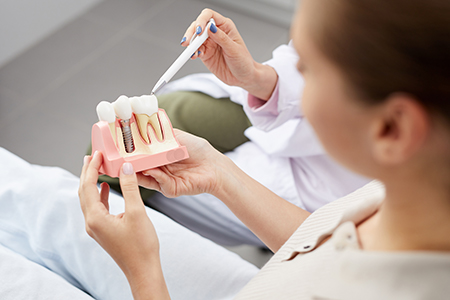
Today, dental implants represent the most advanced system for the replacement of missing teeth. While conventional fixed bridges and dentures remain effective and satisfying ways to replace missing teeth, dental implants come the closest to replicating the look, feel, and function of a natural smile.
With dental implants, you can once again enjoy all your favorite foods and speak and smile with renewed confidence and ease. Because dental implants behave in much the same way as the roots of natural teeth, they provide unrivaled stability for the placement of a broad range of dental prostheses, including crowns and bridges up to a complete set of teeth. For patients who wear full dentures, dental implants provide the added stability and retention required to improve comfort and fit while preventing any embarrassing slippage.
If you are struggling with tooth loss and looking for the best solutions for the replacement of missing teeth, visit the office of Signature Dental Care to learn more about dental implants and all the state-of-the-art services we provide. At the office of Signature Dental Care, we take pride in creating beautiful and healthy smiles!
Dental implants are small, biocompatible surgical posts that behave in much the same way as the roots of natural teeth. Once placed and integrated with the surrounding bone, dental implants provide unparalleled support for single crowns, bridges, and dentures. As the most advanced method for the replacement of missing teeth, they offer satisfying, long-lasting, and functional solutions for rebuilding a complete smile.
Whether you’re missing one tooth, multiple ones, or missing all your teeth, you can rebuild a complete and beautiful smile with dental implants! According to statistics, roughly 3 million people have already received dental implants, with that number increasing at a staggering rate of 500,000 per year! The soaring popularity of dental implants is attributed, in large part, to the numerous benefits they offer as compared with other methods of care.
While conventional fixed bridges and dentures provide effective and satisfying solutions for the replacement of missing teeth, dental implants offer several advantages over traditional methods of care:
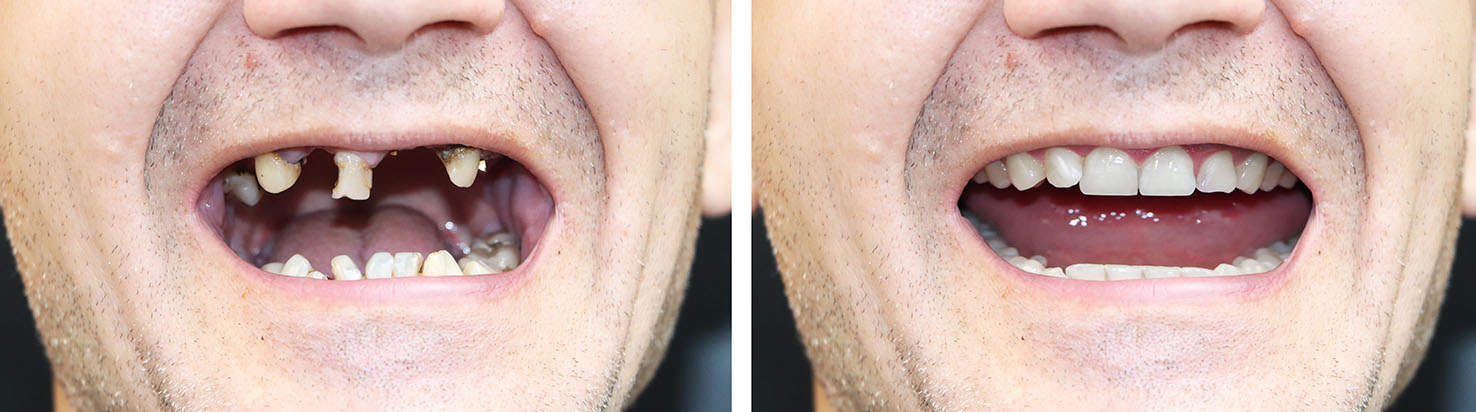
If you are wondering if you’re a candidate for dental implants, it’s easy enough to find out. At the office of Signature Dental Care, we’re not only happy to look at your smile, but we’ll also answer all your questions and explain your best options for dental implants. We treat every smile as unique and develop personalized treatment plans based on your medical and dental histories, current oral health, cosmetic expectations of care, lifestyle, and budget.
It’s essential to plan and meticulously execute every step in care, from initial treatment planning and the precise placement of dental implants all the way to the design, fabrication, and insertion of the final crowns, bridges, or dentures.
Surgery to place dental implants is typically considered a minor surgical procedure and performed on an outpatient basis. However, the exact extent of the procedure depends upon the type and number of dental implants and whether or not any additional procedures are required to prepare the supporting bone.
We view communication as a vital part of patient care. Before your dental implant procedure, we’ll discuss dental anesthesia, options for dental sedation, and provide detailed pre-op and post-op care instructions. You can count on our office to keep you well-informed every step of the way.
Once a dental implant gets placed, it takes a few months to integrate fully with the surrounding bone. While a few implant solutions allow placing a same-day temporary crown or bridge, others require waiting for complete healing and osseointegration (fusion with the surrounding bone) to place the permanent prostheses.
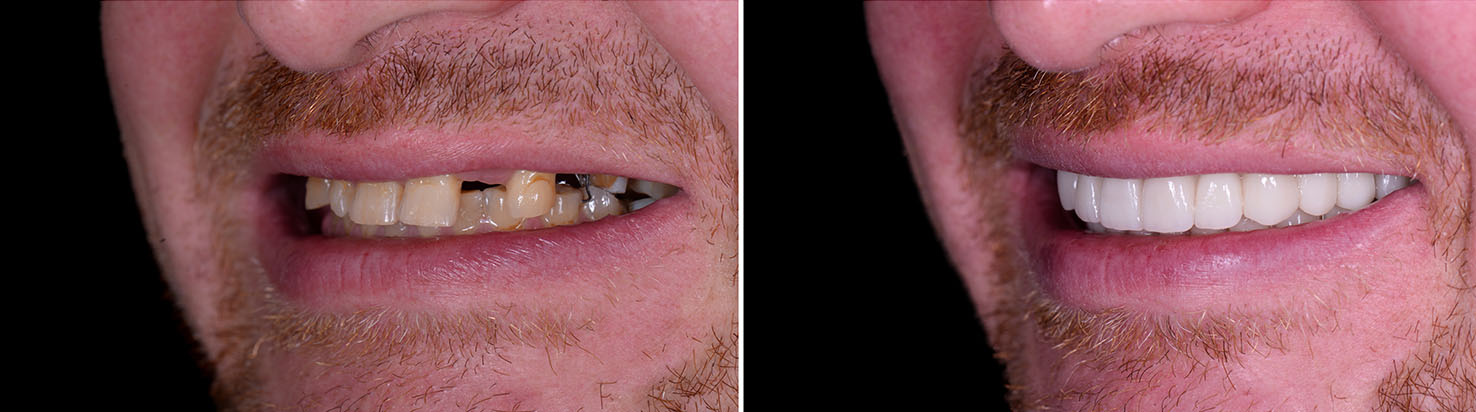
According to clinical studies, dental implants have a demonstrated long-term success rate of well over 95%. However, the long-term stability and success of a dental implant depend upon the presence of sufficient bone at the time of placement. In cases of periodontal disease or following the extraction of a tooth, bone volume is often lost. By placing a bone graft in the extraction site, or prior to the placement of a dental implant, we can establish sufficient bone support for a sturdy and stable dental implant.
Missing teeth do more than cause embarrassing gaps in your smile. For one thing, they can also affect your ability to speak or chew nutritious food with ease. By not replacing missing teeth, the adjacent ones can shift towards the space over time and change your bite and compromise the health of your smile in many ways.
With all of the advances in dental materials, technology, and treatment methods available today, it’s easier than ever before to replace missing teeth with the most natural-looking and aesthetically pleasing results of care.
At the office of Signature Dental Care, we’re pleased to offer leading solutions to improve your oral health and give you a smile you can feel confident sharing with the world. We give you back the complete smile you have lost and provide personalized solutions for all of your oral healthcare needs. To find out more about dental implants or schedule an appointment so that we can take a closer look at your smile, give us a call today.

Dental implants are small, biocompatible posts surgically placed in the jaw to replace the root portion of a missing tooth. An implant supports an abutment and a restorative crown, bridge, or denture so the replacement functions like a natural tooth. Over time the implant fuses with the surrounding bone in a process called osseointegration, which creates a stable foundation for chewing and speech.
The implant body is typically made from titanium or a titanium alloy because of its proven compatibility with bone and soft tissues. The restorative portion is custom designed to match adjacent teeth for proper bite and esthetics. With appropriate planning and care, implants allow patients to eat, speak, and smile with confidence while preserving underlying bone structure.
Good candidates for dental implants generally have healthy gums and sufficient jawbone to support an implant, along with good overall health. Certain medical conditions, smoking, or medications can affect healing and implant success, so a comprehensive medical and dental history is important. Advanced imaging, such as cone beam CT scans and digital x-rays, helps determine bone volume, nerve location, and ideal implant positioning.
A careful clinical evaluation also considers bite, adjacent teeth, and cosmetic goals to develop a personalized treatment plan. In many cases, bone grafting or sinus elevation can prepare a site that initially lacks adequate bone. The office of Signature Dental Care can perform a full assessment and explain realistic treatment options based on your individual anatomy and goals.
Implant restorations range from single-tooth crowns to multi-unit implant-supported bridges and complete-arch solutions that replace all teeth in an upper or lower jaw. A single-tooth implant restores one missing tooth without altering adjacent teeth, while implant-supported bridges use strategically placed implants to support multiple replacement teeth. Full-arch options include fixed implant bridges and implant-retained overdentures, each offering different levels of permanence and maintenance.
The choice of restoration depends on the number of missing teeth, bone availability, functional needs, and esthetic expectations. Some protocols allow provisional restorations to be placed immediately, while others require a healing period before the final prosthesis is delivered. Your dentist will review pros and cons of each approach and recommend the most predictable solution for long-term function and appearance.
Implant treatment begins with diagnostic records and a treatment plan that maps implant position and the final restoration. On the day of surgery, the area is numbed and the implant is placed in the jaw; the procedure is usually performed on an outpatient basis and may take from under an hour to a few hours depending on complexity. After placement, a healing interval allows the implant to integrate with bone, and patients may receive a temporary restoration when appropriate.
Postoperative recovery commonly involves mild swelling, tenderness, and short-term dietary modifications while tissues heal. Most patients return to normal activities within a few days, but full osseointegration typically takes several months. During follow-up visits your dentist will monitor healing and guide you on oral hygiene and when to proceed with the definitive restoration.
Bone grafting is recommended when there is insufficient jawbone to support a stable implant, which can result from long-term tooth loss, periodontal disease, or trauma. Grafting rebuilds lost bone volume by placing bone material or biologic scaffolds into the deficient area, creating a stronger foundation for predictable implant placement. In some cases a sinus lift is performed in the upper jaw to create additional height for implants near the sinus cavity.
The grafted area requires time to integrate and mature before an implant can be placed, and the healing period varies with the technique and graft material used. Properly performed grafting improves the long-term prognosis of the implant and helps maintain facial contours over time. Your dentist will review imaging and explain whether grafting is necessary and which approach best suits your needs.
Local anesthesia is commonly used to numb the surgical site so implant placement is comfortable and pain-free during the procedure. For patients with anxiety or more extensive treatment needs, additional sedation options such as nitrous oxide, oral sedatives, or IV sedation may be offered to enhance comfort. The choice of anesthesia depends on the treatment complexity, patient preference, and medical history, and it will be discussed during planning.
Prior to any sedation, your dental team reviews systemic health, current medications, and post-operative instructions to ensure safety. Monitoring during the procedure helps maintain stable vital signs and a smooth recovery. Clear pre-op and post-op guidance is provided so patients know what to expect and how to care for themselves after surgery.
Immediately after implant surgery, follow your dentist’s instructions for oral hygiene, dietary modifications, and activity limitations to support healing. Gentle rinsing, avoiding hard or crunchy foods, and keeping the surgical area clean reduce the risk of complications while tissues recover. Over-the-counter or prescribed medications may be recommended to control discomfort and inflammation during the first few days.
Long term, implants require the same daily care as natural teeth, including brushing twice a day, flossing, and routine professional cleanings to prevent peri-implant disease. Regular dental checkups allow the dentist to assess implant stability, the condition of surrounding gums, and the integrity of the restoration. Maintaining general health, avoiding tobacco, and managing conditions like diabetes also contribute to implant longevity.
As with any surgical procedure, dental implants carry potential risks such as infection, bleeding, swelling, or delayed healing in the treated area. Rare but more significant complications can include injury to adjacent teeth or nerves, sinus involvement with upper-jaw implants, and failure of the implant to integrate with bone. Early diagnosis and prompt management of problems reduce long-term consequences and often preserve treatment outcomes.
Risk is minimized through careful planning, thorough imaging, and attention to systemic and oral health factors before surgery. Your dentist will review potential complications during the consultation and outline steps taken to mitigate them, including preoperative preparation and postoperative follow-up. If concerns arise after placement, timely communication with the dental team helps achieve the best possible resolution.
When properly placed and cared for, dental implants can last for many years and often for a lifetime, though individual outcomes vary. Factors that influence longevity include oral hygiene, smoking, systemic health, occlusal forces such as grinding, and the quality of the initial treatment plan. While the implant fixture often remains stable long-term, the prosthetic components like crowns, screws, or acrylic denture teeth may require repair or replacement over time due to wear.
Regular maintenance appointments help detect early signs of wear or tissue changes so restorations can be adjusted or replaced before problems escalate. Night guards or other protective options may be recommended for patients with bruxism to reduce stress on the implant restorations. A partnership between patient and dental team supports the best possible lifespan for implant treatment.
To schedule a consultation, call the office at (602) 842-6550 or visit the practice in person at 5340 S Power Rd, Suite 104 in Gilbert, AZ to request an evaluation. At your first visit the dentist will review your medical and dental history, perform an oral exam, and often take diagnostic x-rays or a 3D scan to assess bone and plan treatment. Bringing a list of current medications, prior dental records if available, and any questions about your goals will help make the appointment efficient and informative.
During the consultation you will receive a personalized treatment overview that explains recommended steps, expected timelines, and options for anesthesia or preparatory procedures like bone grafting if needed. The team will also explain preoperative instructions and what to expect during recovery so you can make an informed decision. If you choose to proceed, the office will coordinate scheduling and any necessary imaging to begin care.